
Product Details

Description

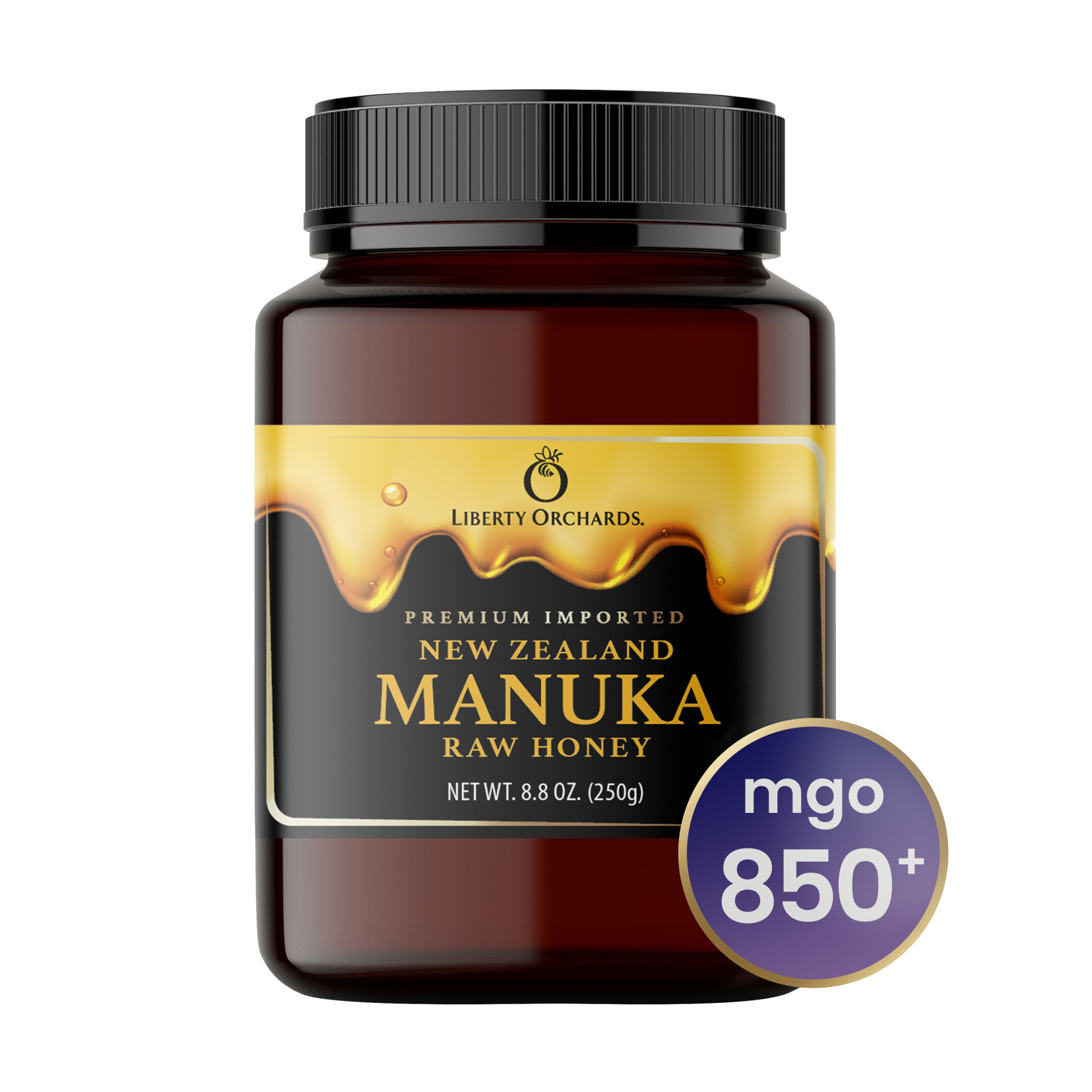
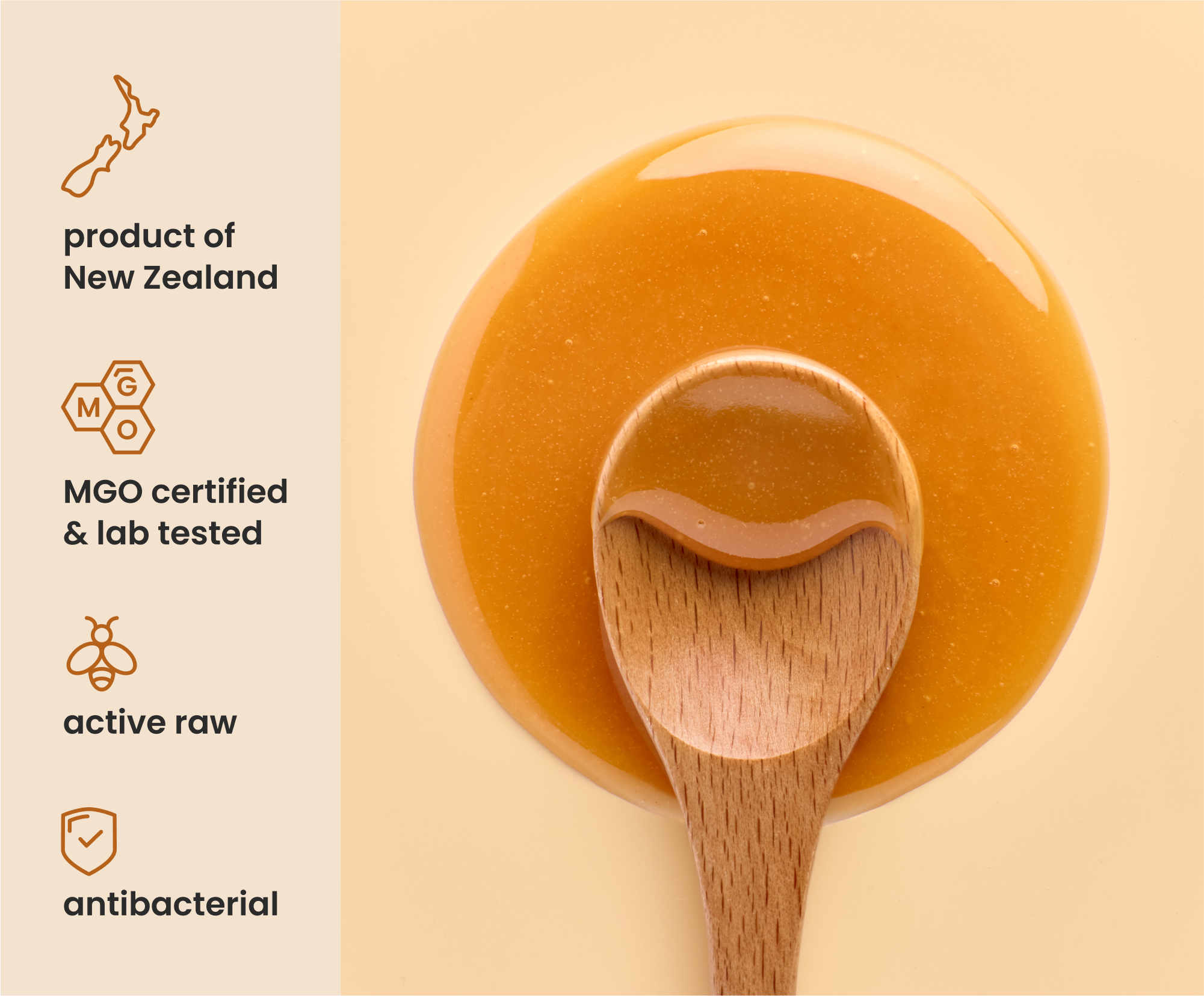
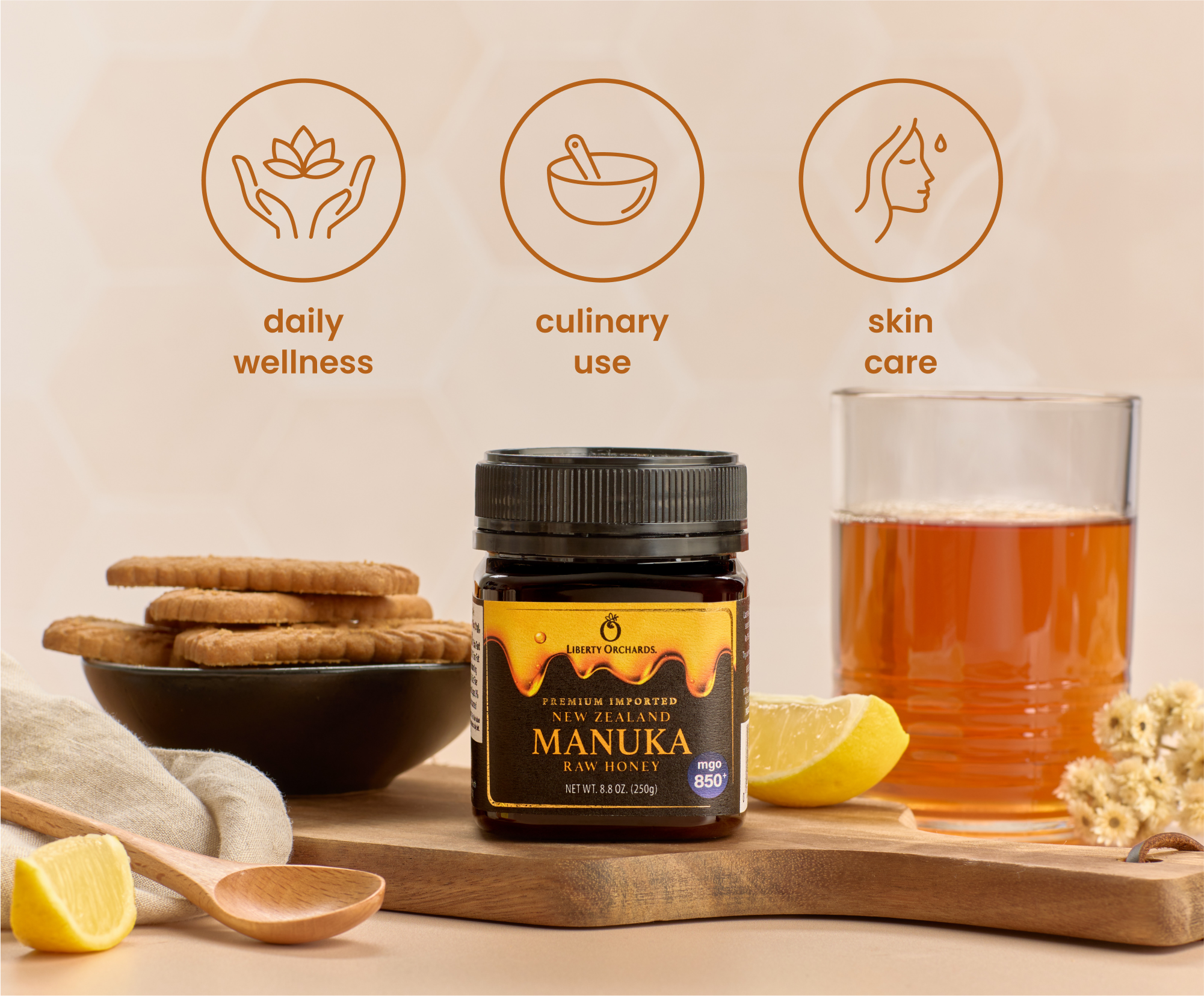
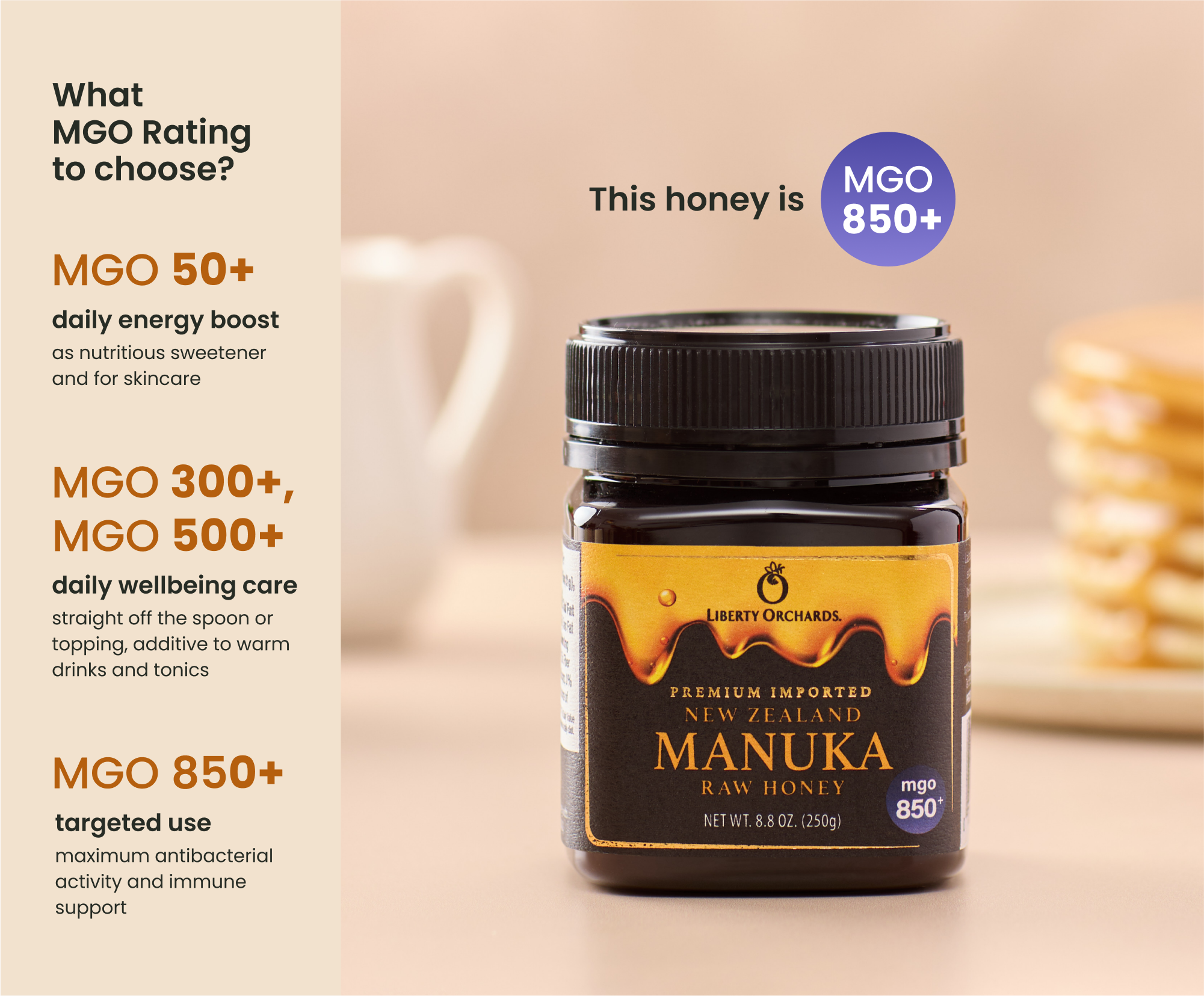
Our MGO850+ Manuka Honey is an exceptionally rare honey, sourced from a small selection of remote regions in New Zealand. Due to its high methylglyoxal (MGO) content, this honey is valued for its purity and potency. Certified to contain at least 850mg/kg of MGO, this Manuka honey is a powerful option for those seeking a natural addition to their daily routine.

  • Certified Potency: Contains a minimum of 850mg/kg of methylglyoxal (MGO), offering one of the highest concentrations available in Manuka honey.

  • Rare & Pure: Sourced seasonally from select remote locations, ensuring the highest purity and quality of Manuka honey.

  • Gluten-Free & Non-GMO: This honey is free from gluten and genetically modified organisms, providing a clean and natural product.

Experience the unmatched quality and rarity of MGO850+ Manuka Honey, a powerful natural option that adds both richness and versatility to your daily routine.

Ingredients

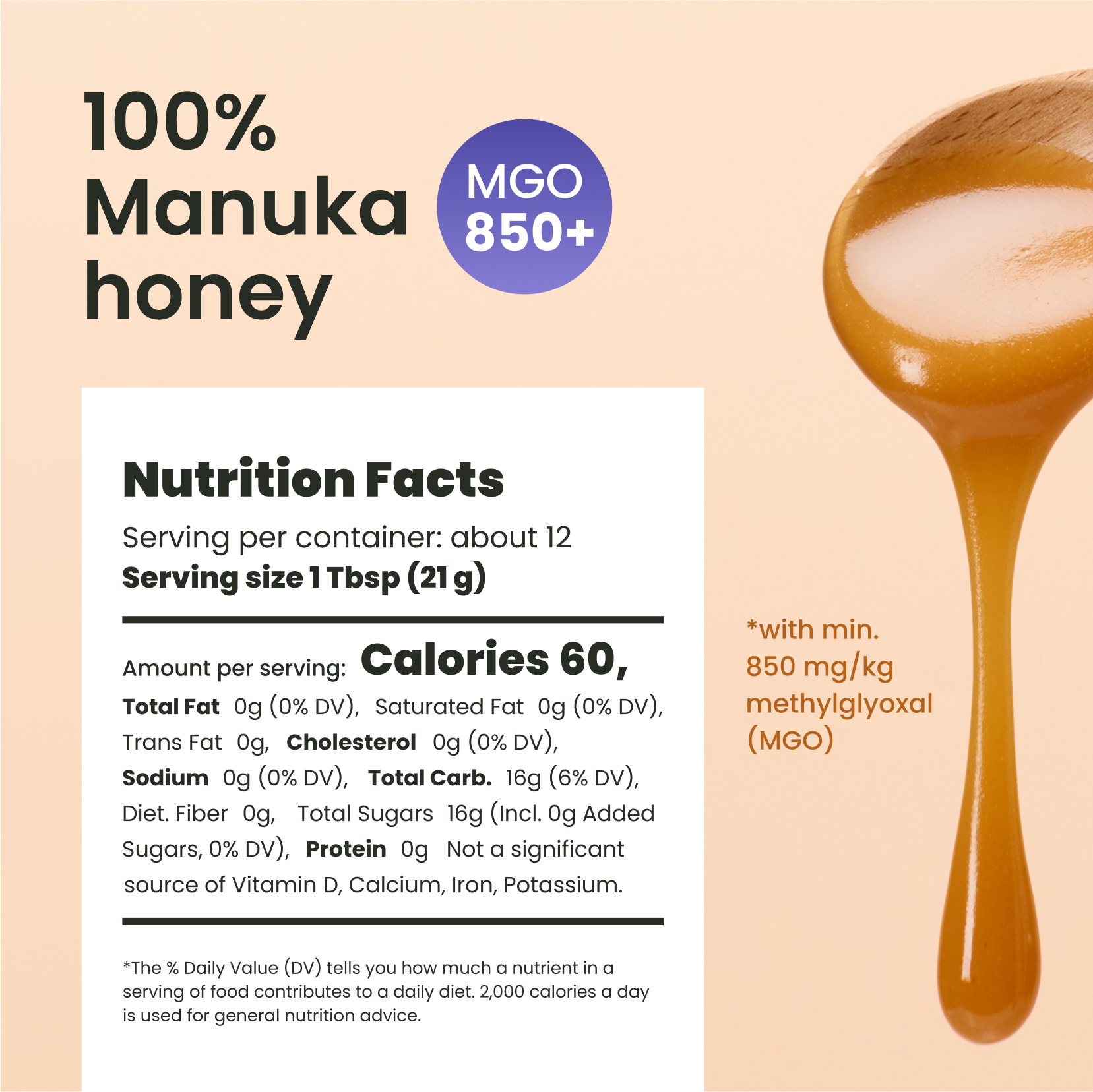
100% Manuka honey with min. 850 mg/kg methylglyoxal (MGO).

Nutritional Facts

Servings Per Container: About 12<br>
Serving Size: 1 Tbsp (21g)<br>
Amount per serving: Calories 60<br>
<b>Total Fat:</b> 0g (0%DV)<br>
Saturated Fat: 0g (0%DV)<br>
Trans Fat: 0g<br>
<b>Cholesterol:</b> 0mg (0%DV)<br>
<b>Sodium:</b> 0mg (0%DV)<br>
<b>Total Carbohydrates:</b> 16g (6%DV)<br>
Dietary fiber: 0g<br>
<b>Total Sugars:</b> 16g<br>
Including 0g Added Sugars (0%DV)<br>
Protein: 0g<br>
Not a significant source of Vitamin D, Calcium, Iron, and Potassium. <br>
* The % Daily Value (DV) tells you how much a nutrient in a serving of food contributes to a daily diet. 2,000 calories a day is used for general nutrition advice.

FAQs

What is the difference between Aplets & Cotlets and Turkish Delight?

Aplets & Cotlets are a Washington variation of Turkish Delight, but made with real fruit puree from apples and apricots.

Traditional Turkish Delight (Lokum) is made from sugar syrup and starch to create a smooth, gel-like texture, usually flavored with rose, citrus, or nuts

Key differences:

  • Ingredients: Aplets & Cotlets use apple or apricot puree plus walnuts.Turkish Delight typically uses sugar, starch, fruit essences, and optional nuts.
  • Texture: Aplets & Cotlets have a slightly softer, fruitier texture due to the real fruit base.Turkish Delight is firmer and more gelatinous.
  • Flavor profile: Aplets & Cotlets taste like natural fruit and nuts.Turkish Delight has classic Middle Eastern flavors such as rose, lemon, pomegranate, or pistachio.

Aplets & Cotlets are a uniquely American, fruit-based interpretation of Turkish Delight with a softer texture and Pacific Northwest flavor profile.

What happened to Aplets & Cotlets?

Aplets & Cotlets are still here — and nothing about the recipe has changed.
The same ingredients, the same traditional process, and the same classic flavors created more than a century ago are still used today.

The only things that have changed are the packaging and seasonal designs. We occasionally refresh our box artwork and offer limited-edition holiday covers, but the confection inside remains exactly as generations have enjoyed it.

In short:
Aplets & Cotlets are the same beloved fruit-and-nut candies they’ve always been—just dressed in updated packaging for modern and seasonal celebrations.

Are Aplets&Cotlets still made in Cashmere, Washington?

Yes — Aplets & Cotlets are still made in Cashmere, Washington. The recipe, production process, and quality standards remain the same as always. The only changes over time have been updates to packaging and occasional limited-edition designs.

Where can I buy Aplets & Cotlets?

You can buy Aplets & Cotlets directly from the official website (LibertyOrchards.com). They are also available from select retailers and online candy shops. During holiday seasons we often offer special gift boxes and limited-edition packaging options, so ordering early on the website is the best way to ensure availability.

How do you store Aplets & Cotlets?

To keep Aplets & Cotlets fresh and delicious:

  • Store them in a cool, dry place — avoid direct sunlight or high humidity.
  • Keep them in an airtight container or sealed packaging.
  • If your climate is warm, you may choose to refrigerate them; just allow them to reach room temperature before eating to preserve their soft, chewy texture.